Just down the street from my place stands a recreation center with an ominous past, Pickwick Bowling Alley and Gardens.
"The recreation center known today as The Pickwick Bowl, in the 1940's, was just a trailer park with a community swimming pool. Despite the innocuous slogan "For 'fun in the sun' meet me at the Pickwick Pool," this small body of water had more than its share of scandal and urban legends. Not only did a "squeaky clean" teen-age celebrity reputedly get caught exposing himself to the other swimmers (leading to his firing at Disney Studios, and essentially the end of his career), but for some strange reason the pool area seemed to attract fatal injuries as children died from drownings and diving board accidents. Safety concerns were most likely the reason the pool was eventually filled in with dirt (creating the Pickwick Gardens).
In 1958, construction began on the bowling alleys and adjacent ice rink. However, they may have built over the old "death magnet" at that site, but apparently they didn't get rid out it. Employees have told GHOULA confidentially that the management doesn't want it known (and denies) that many people have died (accidentally) on the ice rink. Strangely, all the death that seems to swarm around the premises has nothing to do with Pickwick's ghost story. The employees claim (and the management denies) that the ghost of a former manager haunts the upstairs office. Papers and other objects have been seen sliding forcefully across the desk for no apparent reason, as well as the door to that office seems to close by itself."-ghoula
"That said, this recreation center has another claim to fame in the local ghost culture. Pickwick Bowl was the inspiration for one of the audio-animatronic "happy haunts" from Disneyland's Haunted Mansion. There used to be a sign in front of this leisure complex that featured a caricature of "Pickwick," the Dickens character (and this establishment's mascot). It seems that Imagineers that would commute to work at WED enterprises (now Walt Disney Imagineering) just a few blocks away decided to pay tribute to the cheerful fellow on the sign they past everyday. Thus, in the ballroom scene of Disneyland's Haunted Mansion, a ghost hanging from a chandelier (also known by the name "Pickwick") was created to match the one at Pickwick Bowl."-ghoula
The Pickwick Pool before being filled in in 1960's
Just after being filled in and converted into Pickwick Bowl
Pickwick Bowl Today
Tuesday, October 23, 2012
Friday, October 19, 2012
The Griffith Observatory, Los Angeles
Griffith Observatory is in Los Angeles, California. Sitting on the south-facing slope of Mount Hollywood in L.A.'s Griffith Park, it commands a view of the Los Angeles Basin, including Downtown Los Angeles to the southeast, Hollywood to the south, and the Pacific Ocean to the southwest. The observatory is a popular tourist attraction with an extensive array of space and science-related displays. View from a trail in Griffith Park from the south, looking north. 3,015 acres (12.20 km2) of land surrounding the observatory was donated to the City of Los Angeles by Colonel Griffith J. Griffith on December 16, 1896. In his will Griffith donated funds to build an observatory, exhibit hall, and planetarium on the donated land. As a Works Progress Administration project,construction began on June 20, 1933, using a design developed by architect John C. Austin based on preliminary sketches by Russell W. Porter. The observatory and accompanying exhibits were opened to the public on May 14, 1935. In its first five days of operation the observatory logged more than 13,000 visitors. Dinsmore Alter was the museum's director during its first years; today, Dr. Ed Krupp is the director of the Observatory.
Two people have committed suicide of the Hollywood sign and there have been many sightings of weird looking figures and lights by the sign late at night. From the Griffith observatory you can see the sign very well and employees there have reported sightings of ghosts by the sign.
The Griffith Park Observatory has placed a large bronze bust of James Dean just outside the domed building (on the sidewalk to the west of the main lawn). The bust sits atop a white column, which contains a gold star and the words "James Dean" written large, plus a bronze plaque commemorating the making of key scenes of "Rebel Without a Cause." People say they have seen the apparition of James Dean himself standing looking out toward the basin of Los Angeles.
Two people have committed suicide of the Hollywood sign and there have been many sightings of weird looking figures and lights by the sign late at night. From the Griffith observatory you can see the sign very well and employees there have reported sightings of ghosts by the sign.
The Griffith Park Observatory has placed a large bronze bust of James Dean just outside the domed building (on the sidewalk to the west of the main lawn). The bust sits atop a white column, which contains a gold star and the words "James Dean" written large, plus a bronze plaque commemorating the making of key scenes of "Rebel Without a Cause." People say they have seen the apparition of James Dean himself standing looking out toward the basin of Los Angeles.
Fort Moore Pioneer Memorial, Los Angeles
Fort Moore was an historic U.S. Military Fort in Los Angeles, California, during the Mexican–American War. Its approximate location was at what is now the Hollywood Freeway near the intersection of North Hill Street and West Cesar Chavez Avenue, downtown.
The hill on which it was built became known as Fort Moore Hill, most of which was removed in 1949 for construction of the freeway. The hill was located one block north of Temple Street and a short distance south of present day Cesar Chavez Avenue, between the Los Angeles Civic Center and Chinatown. A small portion of the hill was not bulldozed and remains on the west side of Hill Street on the north side of the freeway.
The fort is now memorialized by the Fort Moore Pioneer Memorial.
Part of Fort Moore Hill became home to a cemetery, with the first documented burial tracing back to December 19, 1853. Alternately known as Los Angeles City Cemetery, Protestant Cemetery, Fort Moore Hill Cemetery, Fort Hill Cemetery, or simply "the cemetery on the hill", it was the city's first non-Catholic cemetery. The cemetery was overseen by the city starting in 1869. It was not well taken care of, lacking clearly delineated boundaries, complete records or adequate maintenance. The Los Angeles City Council passed a resolution on August 30, 1879, closing the cemetery to any future burials except for those with already reserved plots. By 1884, the city had sold portions of the cemetery as residential lots and the rest to the Los Angeles Board of Education (later the Los Angeles Unified School District. The city never removed any bodies, and the former cemetery was the site of repeated, grisly findings and much negative press. As a result, the city began moving the bodies, most to Evergreen Cemetery, Rosedale Cemetery and Hollywood Memorial Park Cemetery, with the final bodies being transferred in May 1947. The recent construction of Los Angeles High School #9 resulted in the discovery of additional human remains. These were excavated by archaeologists in 2006.
Wednesday, October 17, 2012
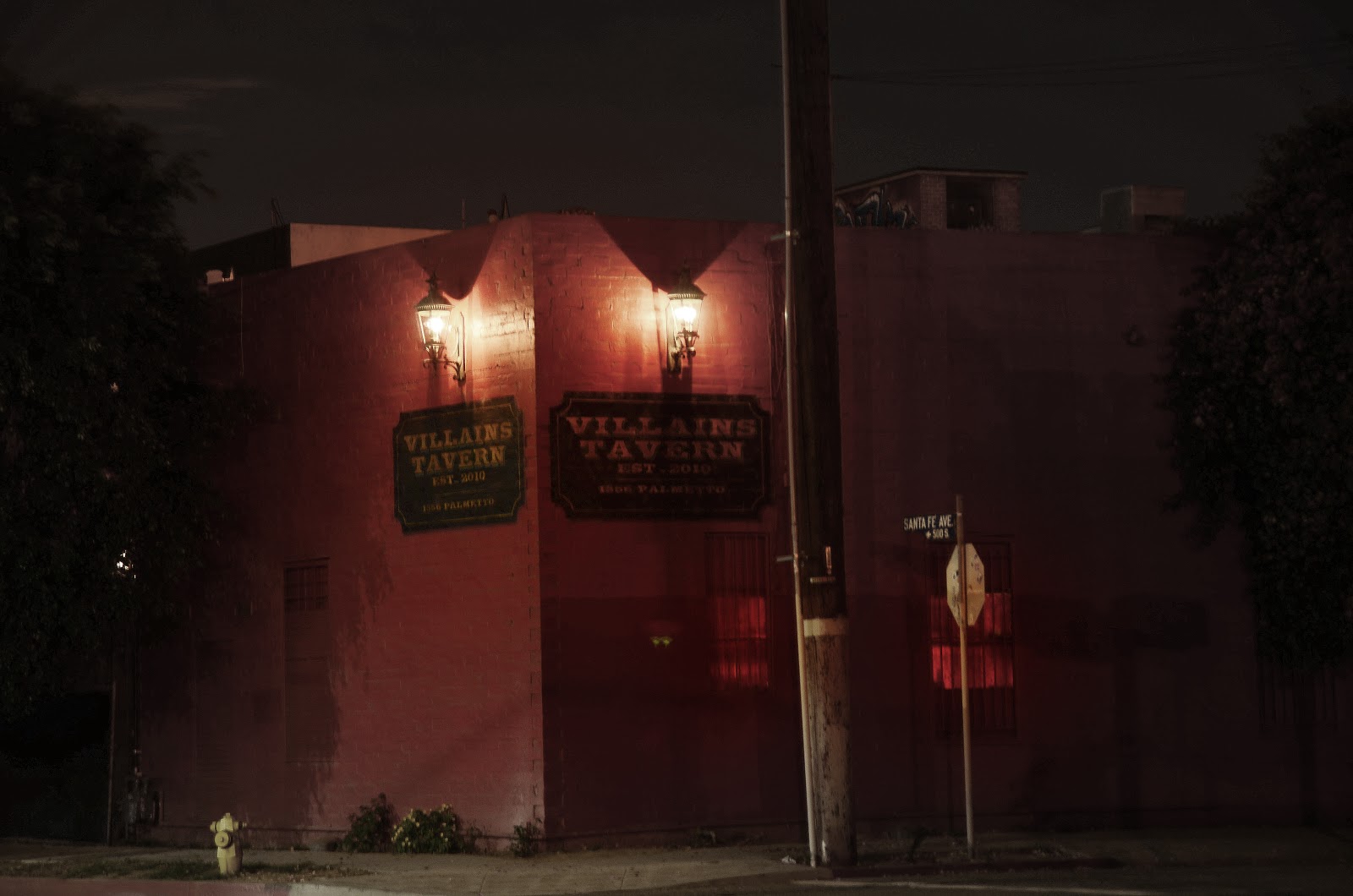
Villiains Tavern and the 4th Street Bridge, Los Angeles, Ca
This entire section of Downtown Los Angeles is notorious for apparitions, and shadow people that roam the night-time bridges and underpasses in this district. It's one sketchy part of town at night, so you want to make sure to go in a group to watch each others backs. I have seen some spooky stuff around this area, and Villian's Tavern is within walking distance of these bridges and old factories.
"Nestled among the seemingly abandoned factory buildings south of the 4th Street Bridge in Downtown Los Angeles, Villains Tavern transports you back to a time when shady drinking establishments, whose mission it was to separate factory workers from their wages, thrived in the neighborhood. Restaurateur and interior designer Dana Hollister (Bordello, 4100, Brite Spot, Cliff's Edge) has created a slightly sinister space with a nod to the Steampunk aesthetic. The dark wood interior provides the perfect setting for carefully selected antiques such as the bar top (which was salvaged from a 1880s NYC tavern), antique ironwork, and the repurposed Gothic church window. The atmospheric 1,600-square-foot open-air patio is illuminated by candles and Edison bulbs and is complete with bar, stage, church pew seating, and shuffleboard. There is a thoughtfully curated bourbon list and hand crafted libations with intriguing names like: Poison Apple, Belladonna, Bluebeard, and Fatal Hour. Edibles include Villains' interpretation of cozy comfort foods. Come straight from work or slip into something more Deco—either way, plan to join us! Cocktails in Historic Places is open to members and non-members alike. Villains Tavern is on the corner of Palmetto and South Santa Fe. Enter the free parking lot on Santa Fe after turning off of Palmetto. The closest Gold Line stop is the Pico/Aliso Station, which is located on the opposite side of the LA River at 1st Street. It's rather a long walk, so you are encouraged to drive or carpool with friends." -ADSLA Location Villains Tavern 1356 Palmetto Los Angeles
Thursday, October 11, 2012
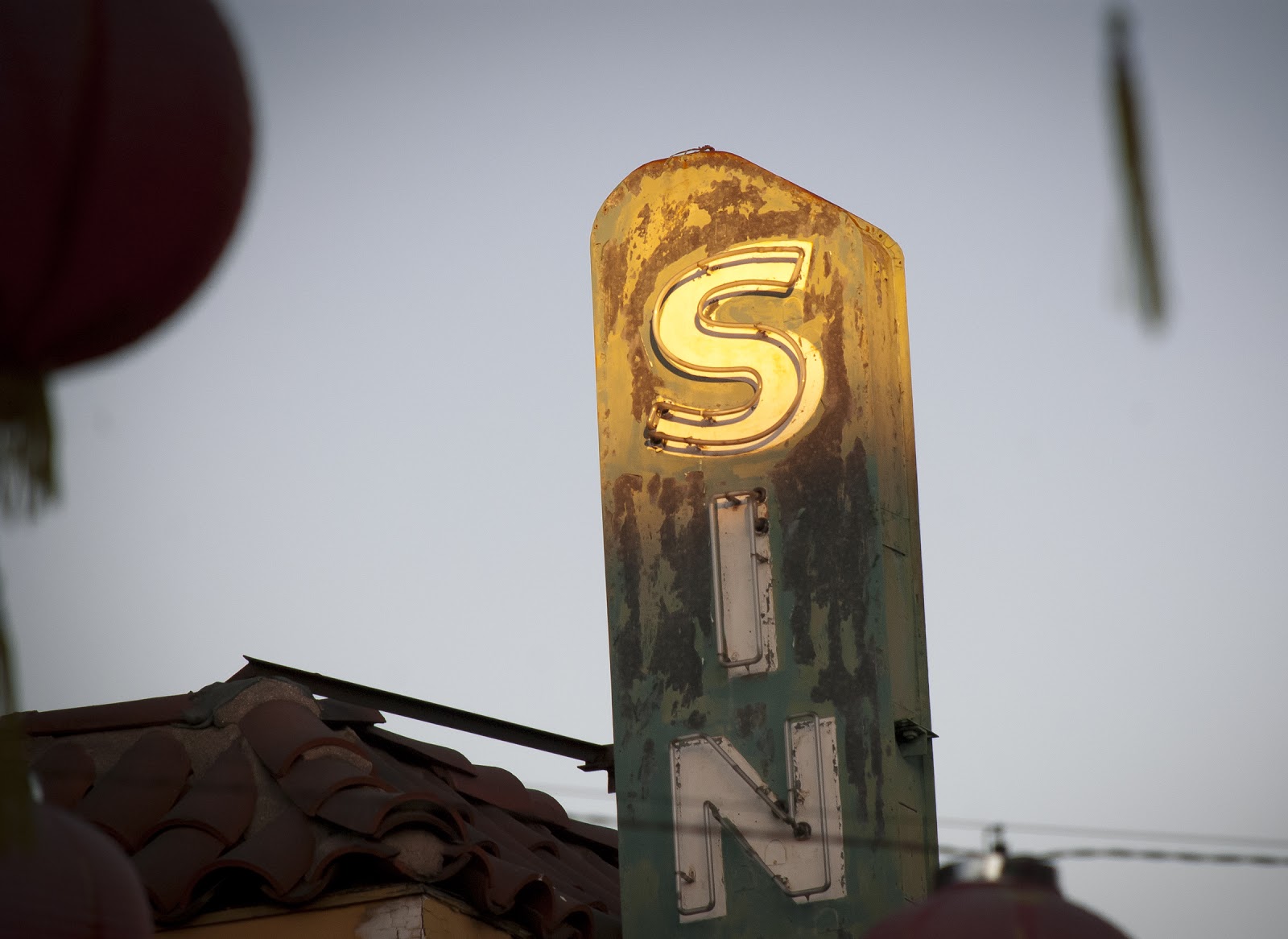
Chinatown, Los Angeles
Chinatown Los Angeles is one of the most haunted places in all of Los Angeles. The Chinese massacre of 1871 was a racially motivated riot on October 24, 1871, when a mob of over 500 white men entered Los Angeles' Chinatown to attack, rob and murder Chinese residents of the city. The dead Chinese in Los Angeles were hanging at three places near the heart of the downtown business section of the city; from the wooden awning over the sidewalk in front of a carriage shop; from the sides of two “prairie schooners” parked on the street around the corner from the carriage shop; and from the cross-beam of a wide gate leading into a lumberyard a few blocks away from the other two locations. One of the victims hung without his trousers and minus a finger on his left hand. Many of these Chinese victims still haunt Chinatown according to residents and friends I have talked to. They want to preserve the location in which they were originally entitled to in Old Chinatown. This area spanned all the way down to Union Station.
Haunted Places in Chinatown:
Plum Tree Inn: 913 N. Broadway, Chinatown. This concept of a "cursed" eatery, even extends to stories of a gang war that erupted here, and/or a workman who accidentally died in one of the past renovations as possible contenders for who haunts this place.
Hop Louie: 950 Mei Ling Way, Los Angeles, CA
Subscribe to:
Comments (Atom)